
Castings, reviews and awards
Updated
Casting is how a signed actor becomes a credit, and the reviews are how that credit turns into fame or a flop. Hollywood Agent is still unreleased, so the sections below follow the systems Steam and the studio have described, plus the screenshots on the store page. The people you send are covered on signing and training. The money you accept, fee or profit share, lands in the ledger on money and offices. The whole month is the monthly loop.
Steam's land-roles text is the job description. Studios announce upcoming films, TV series, and animated features, complete with premises, posters, genres, and available roles. You match actors to parts, schedule auditions on a casting timeline, compete with rival agents, and read a casting report after every audition. Once the role is yours, you negotiate the fee or accept a share of the profits instead of more money up front. The studio page says the same choice in fewer words: negotiate the fee, or take a share of the profits.
The board and the film file
The English Castings screen is a cork board. Tabs across the top read Offers, Role search, My submissions, and Results. Each card carries a tag such as Commercial, TV series, or Film, a small painted poster, a duration, role lines with a fee, and a Decline button next to a file button. Some cards are flagged Now. Filters cover newest, project type, and genre. The rank in that screenshot is Boutique Agency, and the corner clapper reads End Month.
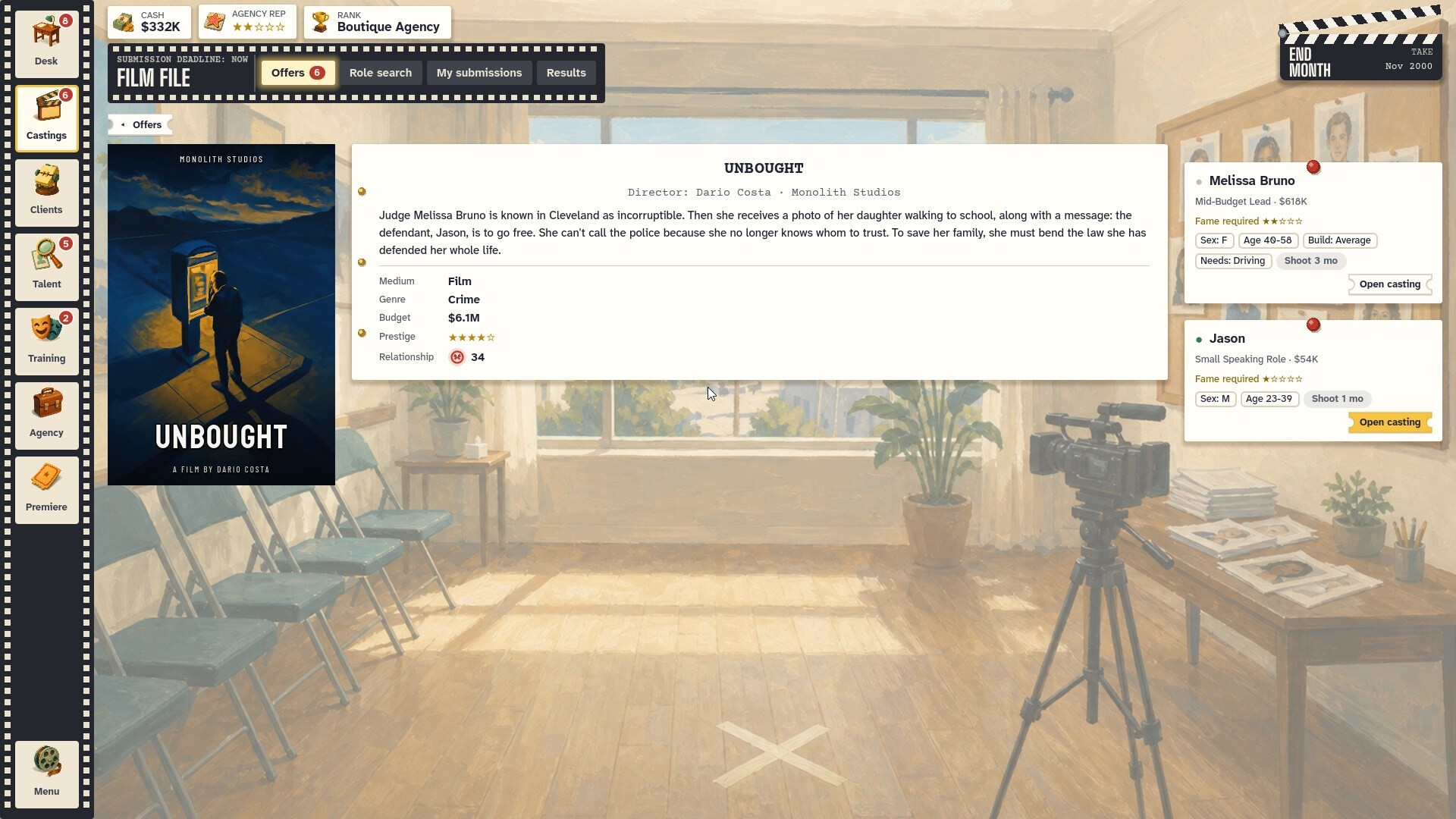
A film file opens the project the card only summarizes. Unbought, in the screenshot above, is a crime film with a short premise, a director credit, a budget, prestige stars, and two roles with age ranges, a build, a driving requirement on one of them, and an Open casting button. The poster is a painting, which is the art rule the feature list states: a painted poster for every production. Art style collects more of those posters. The German Castings board shows the same cork wall with Ablehnen in place of Decline and amounts marked Tsd., which is the language story on PC and languages.
Rival agents are part of the audition, not a separate mode. Steam says competing agencies fight you for roles. The casting report is the announced record of how an audition ended. The screenshots include a results view with Cast and Rejected stamps lined up by month. That is the picture of the report. The individual stamps in a marketing image are examples, not a list of productions you will be offered.
After the release
The career text picks up when the production actually comes out. Box office results, ratings, press reviews, and individual performance reviews determine the client's success. Hits build fame and star power. Those unlock bigger roles, better deals, and new talent who want to join the agency. Then the next month begins. The feature list adds critics, press coverage, and separate film and TV award seasons, so a film award and a television award are announced as different tracks.
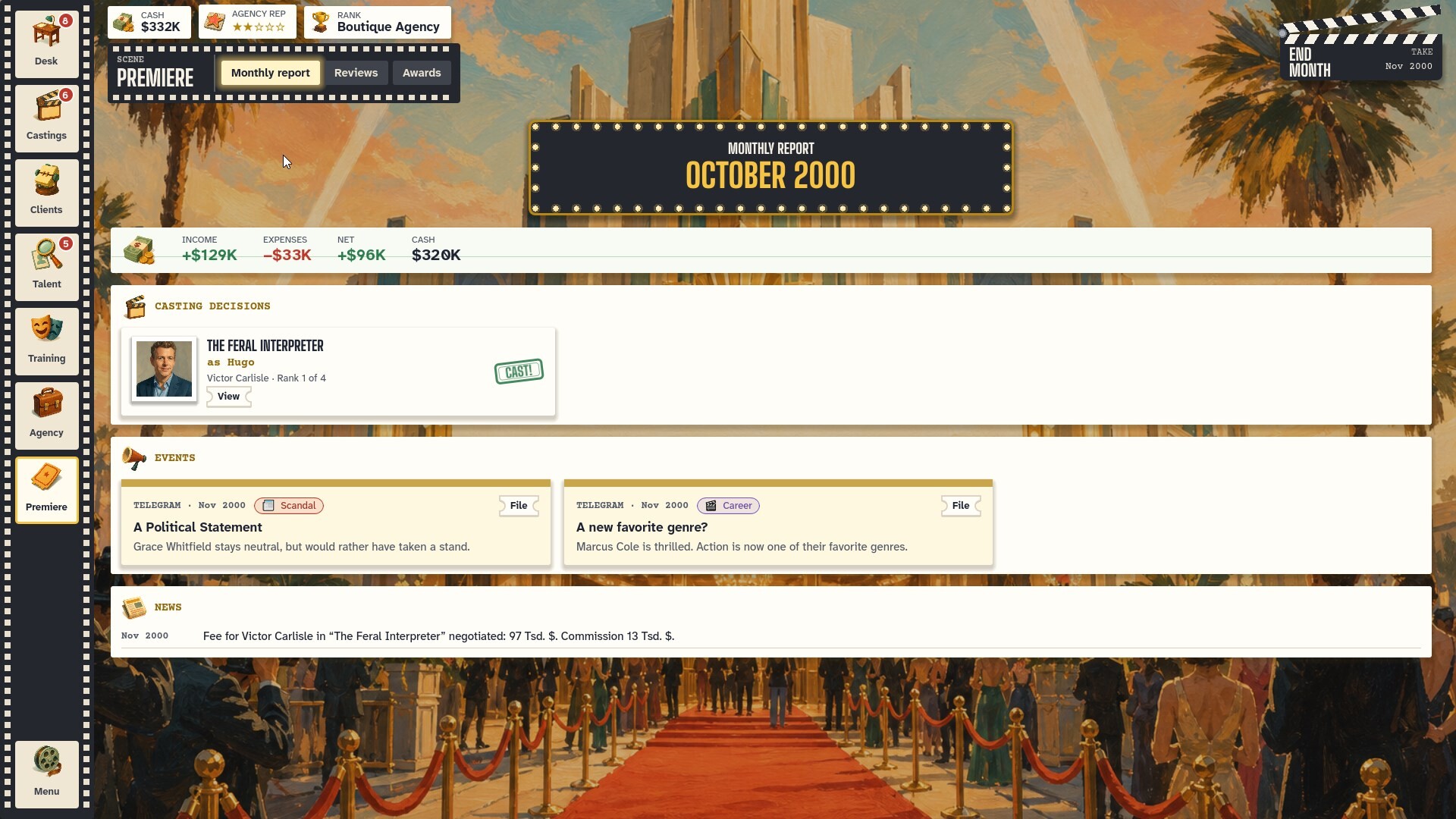
The Premiere screen is where that month is summarized. Tabs read Monthly report, Reviews, and Awards. The October 2000 report in the English screenshot puts income, expenses, net, and cash on one line, then a casting decision stamped Cast, then an Events row of telegrams. One telegram is tagged Scandal. Another is tagged Career. A news line under them records a negotiated fee and a commission. The painted premiere, red carpet and velvet ropes, is the backdrop of the same screen. Scandals and crises are their own feature: difficult choices that affect the agency and its clients. The content notes quote the developer's description of what kind of trouble the text is allowed to include. The telegram in the screenshot is the interface for an event, not a depiction of that harm.
How to choose a part, from what is announced
The announced match is between a person's skills, preferences, and refusals and a role's requirements. The Unbought file shows requirements in the open: age range, a physical build, a skill such as driving, and a fame threshold. The client file shows the other side: skill bars, languages, accents, and special skills. A client who refuses a kind of role, which Steam says they can, is a bad match even when the bars look fine. A client who is already filming is the paused training row from the signing page, so the calendar can block the person you wanted.
The fee-or-share choice is the economic version of the same match. More money now fattens the month. A profit share waits on the box office the review screen will later report. The studio does not publish a formula for which one pays better. The money page is where a thin month becomes a credit-line problem, and where running out of money ends the game. Take the share when the announced fame payoff is the point of the role, and take the fee when the ledger is the problem you already have.
Verdict: Read the role's requirements against the client file, then choose fee or profit share with the current cash in mind. Awards and scandals both come back as events on the monthly report.
FAQ
Are there animated roles?
Yes. Steam and the studio both list animated features, and Steam specifically mentions voice roles, alongside cinema and TV.
Do commercials count?
The Castings board in the official screenshots has a Commercial tag next to Film and TV series, with its own file button. Commercials are part of the interface the store is showing.
Where do awards show up?
The Premiere screen has an Awards tab beside Reviews and the monthly report. The feature list separates film awards from TV awards.
What is a scandal in play?
It is an announced event type. The monthly report shows a telegram tagged Scandal with a short message and a File button. The developer's content description says what kinds of harm the text may mention, and that none of it is shown graphically.
Sources: Steam store about text, Highground game page, official Steam screenshots